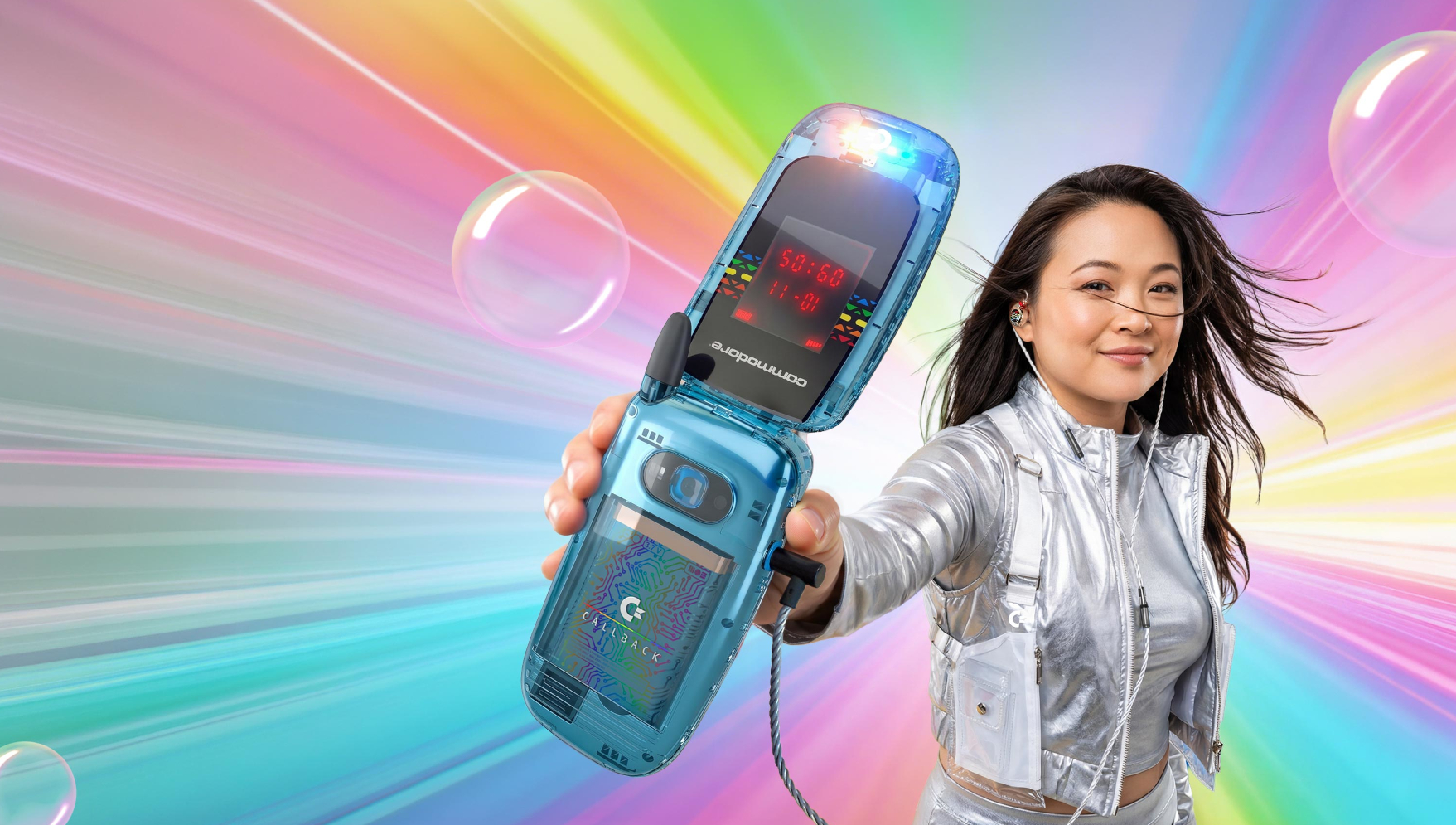
Are Smartphones Trying to Do Too Much?
There was a time when phones had a fairly simple job. You used them to call people, send messages, and maybe take a few photos. Today, smartphones serve as cameras, game consoles, navigation systems, streaming devices, and social media portals. For many people, that's a welcome evolution. For others, it has become exhausting.
A growing number of users have started looking for ways to reduce distractions without giving up modern connectivity entirely. That's the audience Commodore appears to be targeting with its newly announced Callback 8020.
Rather than competing with flagship smartphones on features, the Callback 8020 focuses on doing less.
A Flip Phone for 2026
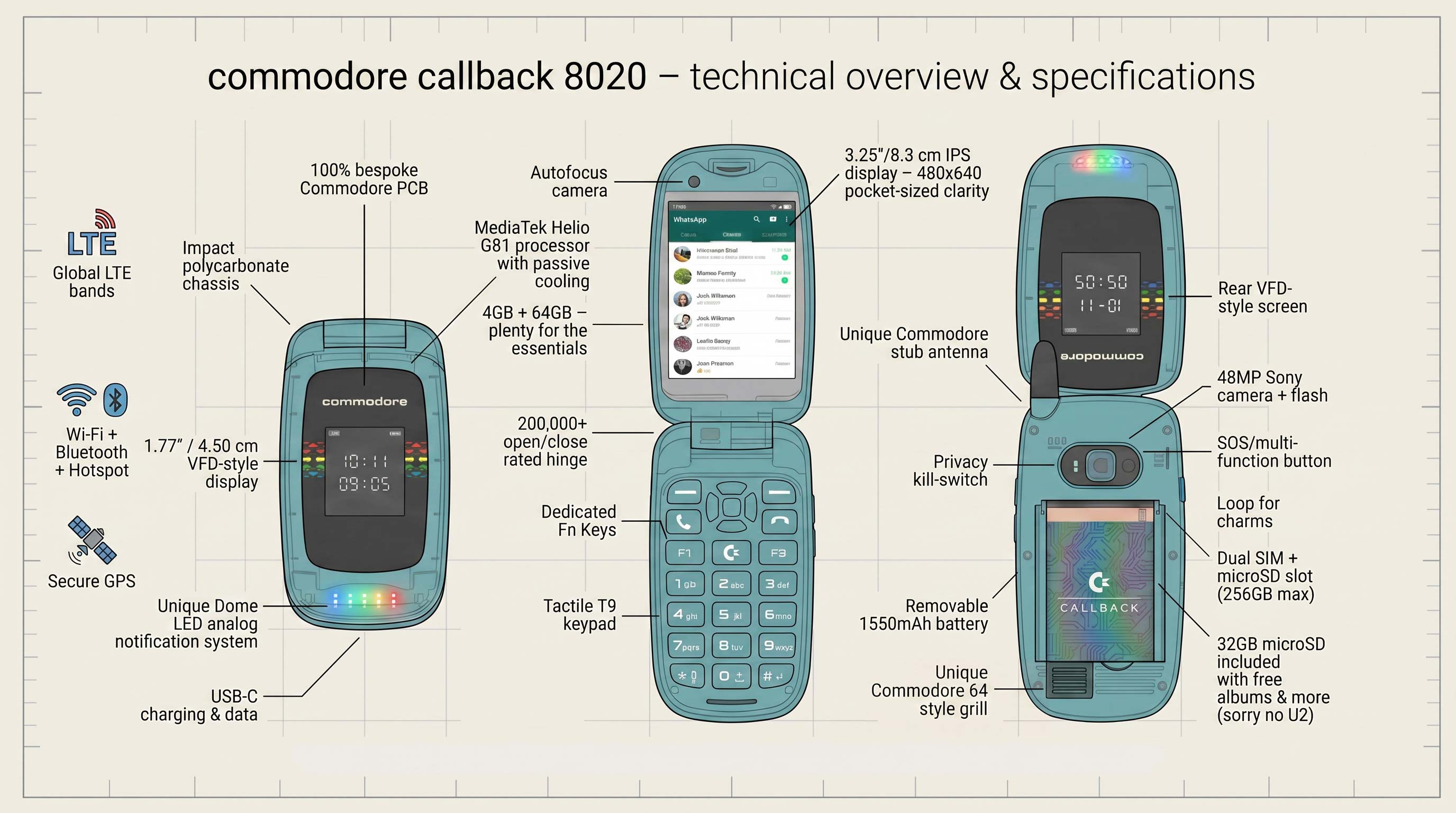
The Callback 8020 is a clamshell phone that combines a familiar flip-phone form factor with modern hardware and software. It features a 3.5-inch internal touchscreen, a secondary external display, support for 4G LTE networks, Wi-Fi, Bluetooth, GPS, and USB-C charging.
Closing the phone ends a call. Opening it answers one. That simple interaction is something many users haven't experienced in years.
The device is powered by a MediaTek Helio G99 processor and includes 8 GB of RAM along with 256 GB of storage. Those specifications are far beyond what most people would expect from a traditional flip phone and place it closer to a lower-end modern smartphone than a feature phone.
Commodore also plans to offer the device in several color options inspired by classic Commodore computers.
No Social Media, No Browser
The most unusual aspect of the Callback 8020 isn't its hardware. It's the software.
According to Commodore, the phone runs a Linux-based operating system designed around communication rather than content consumption. Social media applications are not included, and the phone ships without a web browser.
That decision immediately separates it from most devices currently on the market.
The company says users can still install applications if they choose, and Commodore claims compatibility with the vast majority of Android software. At the same time, the default experience is intended to encourage calling, messaging, and basic communication rather than endless scrolling.
Whether users leave the device in that state is another question entirely, but the philosophy behind the product is clear.
Digital Detox Without Going Offline
The idea of a distraction-free phone isn't new. Several companies have attempted to build devices that limit notifications, reduce screen time, or remove access to social media entirely.
The problem is that many of those products ask users to sacrifice too much. Giving up navigation, messaging apps, wireless connectivity, or modern mobile networks can make daily life difficult.
The Callback 8020 takes a different approach. Instead of removing modern hardware capabilities, it removes some of the software experiences that keep people staring at their screens for hours.
In theory, that gives users a phone that remains practical while reducing some of the behaviors they are trying to avoid.
A Growing Trend
The Callback 8020 arrives at a time when interest in simpler technology appears to be growing. E Ink devices, distraction-free writing tools, minimalist phones, and local-first software projects have all gained attention from users looking for alternatives to constantly connected digital lifestyles.
Will a Linux-powered flip phone solve that problem? Probably not on its own.
Still, there is something refreshing about a company releasing a new mobile device and treating fewer features as a selling point rather than a weakness. For users who miss the days when phones were primarily used for talking to people, the Callback 8020 may be worth a closer look. But the question remains: Is it worth $499 to you?