Smart Speakers Have a Language Problem
For years, voice assistants have promised to make technology easier to use. In practice, many people have learned that success often depends on using the right phrase in the right order. Ask a question slightly differently and the assistant may respond with confusion instead of a sensible answer.
Google believes large language models can finally change that.
The company has announced the new Google Home Speaker, its first speaker designed specifically around Gemini for Home, a voice assistant powered by the same family of AI models that now drive many of Google's products and services.
Available for pre-order ahead of a June 25 release, the speaker carries a $99.99 price tag and serves as Google's latest attempt to make voice interaction feel less like issuing commands to a machine and more like having a conversation.
No More Memorizing Commands
One of the biggest changes is how users interact with the assistant.
Rather than requiring carefully structured commands, Gemini is designed to understand more natural requests. Google says users can issue multiple instructions at once, correct mistakes in the middle of a sentence, and ask follow-up questions without constantly repeating context.
That means a request such as turning off every light except a bedside lamp can be handled as a single instruction. The assistant can also maintain short-term conversational context, allowing users to continue a discussion without restarting from the beginning each time.
Google is also introducing ten new voice options intended to make interactions sound more natural.
A Speaker That Thinks Beyond the Question
The company is placing a strong emphasis on Gemini's reasoning capabilities.
Google provided examples where the assistant can answer questions that require several steps of information gathering before producing a response. Rather than simply reporting a weather forecast, Gemini can determine when a sporting event takes place, identify its location, and provide weather conditions for that specific time and place.
Additional AI-powered features are available through Google's Home Premium service. These include Gemini Live for open-ended conversations, camera history search for Nest devices, and Home Briefs, which summarize activity captured by smart home cameras while the user was away.
Whether those capabilities prove genuinely useful or simply become another collection of features that people try once and forget remains to be seen.
More Than Just a Voice Assistant
Google hasn't ignored the hardware side of the equation.
The Home Speaker uses a 360-degree audio design intended to provide consistent sound throughout a room. The device can also be paired with a Google TV Streamer, allowing up to two speakers to function as part of a home theater setup with surround sound effects.
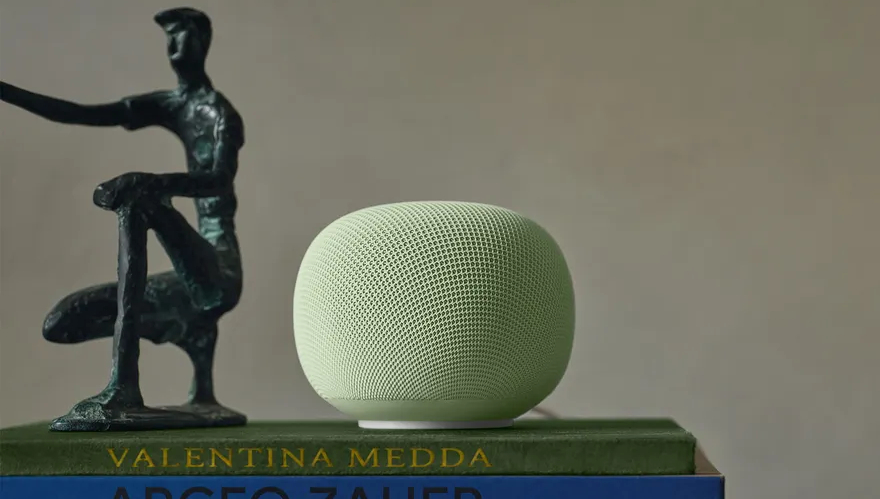
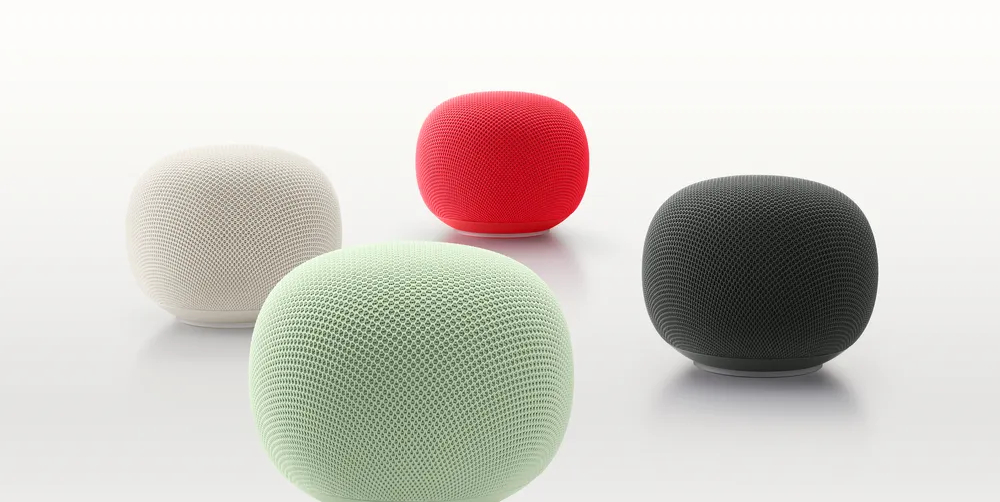
The speaker is wrapped in a knitted fabric exterior and will be available in Hazel and Porcelain color options, with Jade and Berry offered in the United States.
A new underglow light ring provides visual feedback while the assistant is listening, processing requests, or responding. For users concerned about privacy, a physical microphone mute switch is also included.
The Next Test for AI in the Home
The smart speaker market has matured considerably over the past decade. Most devices can already play music, answer basic questions, set timers, and control connected appliances.
Google's challenge is convincing users that AI-powered conversation is enough of an improvement to justify a new generation of hardware.
If Gemini performs as advertised, the biggest upgrade may not be audio quality or smart home features. It may simply be spending less time figuring out how to ask for what you want.