Waiting for the Perfect Flash
Photographing lightning usually requires a combination of patience, timing, and luck. Storms don't arrive on schedule, and even when they do, predicting exactly when a bolt will appear is nearly impossible.
Rather than sitting outside with a camera pointed at the sky, GitHub user sheet315 decided to automate the process.
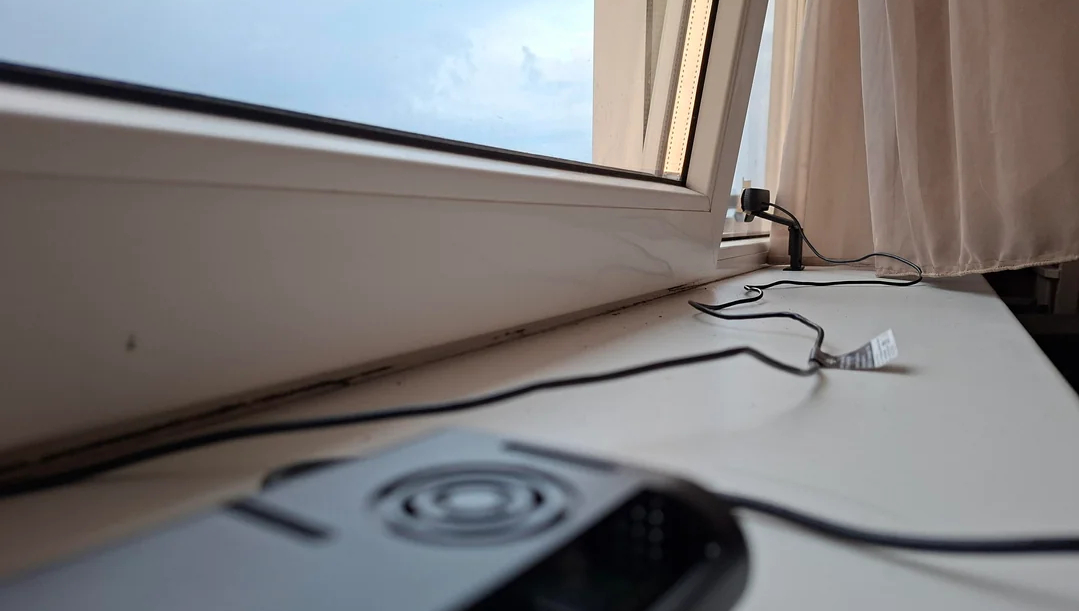
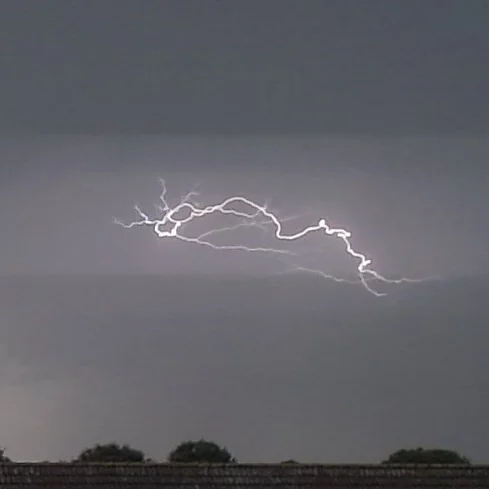
After running continuously for three weeks, the creator's Stormwatch-Pi system recently captured its first lightning strike, validating a simple but effective approach built around a Raspberry Pi and a USB webcam.
A Digital Storm Spotter
The idea behind the project is straightforward. A Python program monitors a live webcam feed and watches for sudden changes in brightness. When a flash is detected, the software saves frames captured immediately before and after the event.
The system records the previous ten frames and the following ten frames, creating a 20-frame sequence centered around the detected flash. Those images are then uploaded to a server where they can be reviewed through a web interface.
It's a simple technique, but it takes advantage of something computers do much better than humans: watching continuously without getting bored.
Built From Everyday Hardware
One of the appealing aspects of Stormwatch-Pi is how little hardware is required.
The project uses a USB webcam connected to a Raspberry Pi, although the software isn't limited to Raspberry Pi hardware. According to the creator, any system capable of running the code and interfacing with a webcam should work.
Setup is similarly straightforward. A client application handles video capture and flash detection while a lightweight server receives uploads and provides a browser-based interface for viewing the camera feed and reviewing captured events.
There are no specialized lightning sensors, custom PCBs, or expensive camera systems involved.
Catching a Fraction of a Second
Lightning photography has long been a favorite challenge for photographers because of how difficult it is to react quickly enough. By the time a person sees a bolt and presses a shutter button, the event is usually over.
Automated systems avoid that problem entirely.
Rather than trying to predict when lightning will occur, Stormwatch-Pi continuously buffers incoming frames and waits for the sky to illuminate. When that happens, the software already has images from moments before the strike occurred.
The first successful capture demonstrates that the approach works, even when using inexpensive hardware.
A Project Ready for Experimentation
The creator has published the project on GitHub, and members of the Raspberry Pi community have already begun suggesting improvements and enhancements.
That's often how projects like this evolve. A simple proof of concept attracts new contributors, additional ideas emerge, and capabilities gradually expand beyond the original goal.
Even in its current form, Stormwatch-Pi shows how a few lines of Python, a webcam, and a Raspberry Pi can turn weeks of waiting into a photograph captured at exactly the right moment. Sometimes that's all it takes to build something useful.