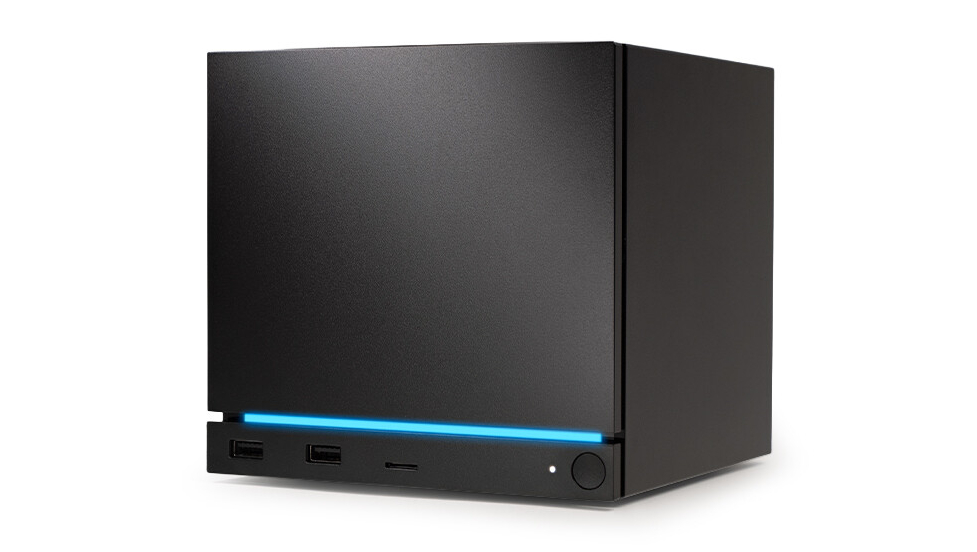
The Steam Machine Is Finally Here
After months of speculation surrounding pricing and availability, Valve has officially launched reservations for the Steam Machine, its long-awaited living room gaming PC powered by SteamOS.
The company is offering four configurations, starting at $1,049 for a model equipped with 512GB of storage. Buyers can also choose versions bundled with the new Steam Controller, while higher-end 2TB models include interchangeable red fabric and walnut faceplates alongside the standard black finish.
Actual shipments won't begin immediately. Instead, Valve is using a reservation system intended to manage demand and reduce the impact of bots and resellers.
A Different Kind of Launch
Rather than opening orders on a first-come, first-served basis, Valve is accepting reservation signups through June 25 before performing a one-time randomization to determine purchase order. Customers selected for the reservation queue will receive an opportunity to purchase a Steam Machine as units become available, while everyone else will be placed on a waitlist.
Valve says the approach was influenced by the recent launch of its new Steam Controller, where demand exceeded expectations and inventory disappeared quickly.
To qualify, customers must have a Steam account in good standing and must have made at least one Steam purchase before April 27, 2026. The company is also limiting registrations to one per household.
The first purchase invitations are scheduled to go out beginning June 29.
Why Is It So Expensive?
One of the biggest questions surrounding the Steam Machine has been its price.
Valve addressed the issue directly in its announcement, pointing to rising component costs and supply chain disruptions. According to the company, the original pricing targets established when development began in 2023 were based on historical trends that suggested memory and storage prices would continue falling over time.
Instead, the opposite happened.
The company says that RAM and storage costs increased significantly over the past year, while certain components became difficult to source regardless of price. Those issues affected both manufacturing costs and the number of units available for launch.
Valve maintains that the Steam Machine is being sold based on component costs rather than through the traditional console strategy of subsidizing hardware and recovering revenue elsewhere.
PC Gaming in the Living Room
Valve is careful not to describe the Steam Machine as a console.
In the company's view, the device is an extension of the PC ecosystem rather than a competitor to traditional consoles. Unlike dedicated gaming systems, the Steam Machine provides access to existing Steam libraries and runs SteamOS, a Linux-based operating system that users can modify and customize.
Valve also points out that SteamOS is no longer limited to its own hardware. With the release of SteamOS 3.8, users can install the same operating system on compatible living-room PCs built from standard components. AMD graphics cards are currently supported, with additional hardware support planned for future releases.
Demand Meets Reality
The launch arrives at an interesting moment for gaming hardware.
While the Steam Machine offers the flexibility of a PC, its starting price places it well above mainstream consoles. That makes it a harder sell for casual players, but potentially attractive for users who already have large Steam libraries and want a dedicated system for the living room.
Whether that audience is large enough to justify Valve's latest hardware push remains to be seen.